Speakers
CAEPIA 2026 Plenary Speakers
José Hernández-Orallo
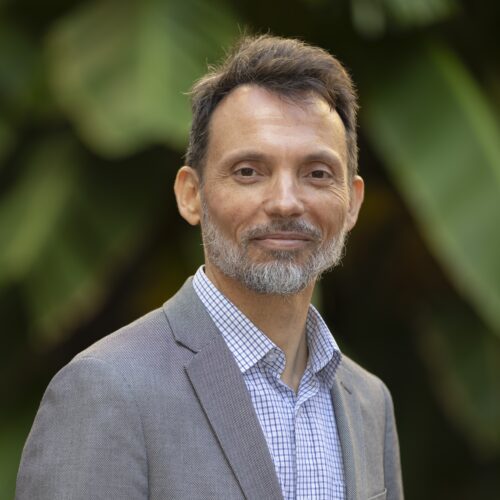
Biography
Prof. Jose H. Orallo Director of Research, Leverhulme Centre for the Future of Intelligence Research Professor, University of Cambridge Associate Fellow, Centre for Human-Inspired AI
Jose H. Orallo is Director of Research at the Leverhulme Centre for the Future of Intelligence, University of Cambridge, UK, and Professor (on partial leave) at TU Valencia, Spain. His academic and research activities have spanned several areas of artificial intelligence, machine learning, data science and intelligence measurement, with a focus on a more insightful analysis of the capabilities, generality, progress, impact and risks of artificial intelligence. He has published five books and more than two hundred journal articles and conference papers on these topics. His research in the area of machine intelligence evaluation has been covered by several popular outlets, such as The Economist, WSJ, FT, New Scientist or Nature. He keeps exploring a more integrated view of the evaluation of natural and artificial intelligence, as vindicated in his book “The Measure of All Minds” (Cambridge University Press, 2017, PROSE Award 2018). He is a founder of aievaluation.substack.com and ai-evaluation.org. He is an advisor of several organizations such as averi.org or the scientific panel of the EU AI Office. He is a member of AAAI, CAIRNE and ELLIS, and a EurAI Fellow.
Website: jorallo.github.io — Scholar: Google Scholar — Email: josephorallo@gmail.com
Talk
AI Evaluation: What next?
Over the past few years, AI evaluation has moved from aggregate performance measures on specific tasks to general-purpose systems, characterised by their profile of capabilities and propensities. Determining the demands of tasks and comparing them against an AI system’s profile makes it possible to predict and explain its behaviour. That is the real goal of AI evaluation. As we begin to understand and address it, even in agentic settings, new problems come knocking. In safety, evaluation environments are either not secure containers or not realistic. In capability, we do not yet know how to devise superhuman tasks of arbitrary difficulty that we can verify. What next? I propose a mix of pragmatism, assuming that systems will be insecure and will need to be monitored at all times, and of foundations, where superintelligence, scaling laws and oversight are understood computationally. AI progress may have entered a blind feedback loop, but we cannot afford the same for its evaluation.
Francisco Herrera

Biography
Francisco Herrera is Full Professor of Artificial Intelligence at the University of Granada, a full member of the Royal Academy of Engineering of Spain (2019), founding director of the Andalusian Research Institute in Data Science and Computational Intelligence (DaSCI, 2017-2026), has been a member of the Spanish Government’s Advisory Council on Artificial Intelligence (CAIA, 2021-2023), and is a Corresponding Member of the Cuban Academy of Sciences (2023). He is Director of the ENIA Chair on ethical and trustworthy AI, co-funded by REPSOL.
In the field of Artificial Intelligence, he has supervised more than 70 doctoral theses, has directed more than 70 research and knowledge-transfer projects, and has published more than 700 scientific articles in international journals. His publications have received more than 190,000 citations, with an h-index of 198 on Google Scholar. He is listed among the world’s most highly cited researchers in “Computer Science” by Clarivate Analytics (2024-present), and ranks 10th worldwide in Research.com’s “Best Computer Science Scientists 2025-2026”. He has received numerous national and international awards and recognitions for his research. His current research lines focus on ethical and trustworthy artificial intelligence, explainability of AI systems, and general-purpose AI models.
Talk
The road to trustworthy AI: from prediction to agentic systems
The talk presents the recent evolution of artificial intelligence, from predictive models aimed at learning patterns from data to generative and agentic systems capable of producing content, drawing inferences, planning, using tools and carrying out actions with increasing degrees of autonomy. This evolution opens up major scientific, industrial and social opportunities, but raises a fundamental demand: developing more capable systems is not enough; they must also be guaranteed to be trustworthy.
Drawing on milestones such as Turing, Rosenblatt’s perceptron, Deep Blue, deep learning, generative AI and agentic AI, the talk examines how the central question has shifted from “can machines think?” to “under what conditions can we trust their results and actions?”. It addresses the main scientific and technical challenges involved in building robust, safe, explainable, traceable, verifiable and governable systems, with appropriate mechanisms for human oversight and control.
The next generation of AI will be defined not only by its ability to predict, generate or act, but by our ability to assess its behaviour, oversee its autonomy and ensure that it operates safely and responsibly.
Concha Bielza — AEPIA Award 2026

Biography
Universidad Politécnica de Madrid, Spain
Concha Bielza has been Full Professor at the Department of Artificial Intelligence of the Universidad Politécnica de Madrid (UPM) since 2010. She holds a degree in Mathematical Sciences (Statistics) from the Complutense University of Madrid (1989) and a PhD in Computer Science from the Universidad Politécnica de Madrid (1996), with a Special Doctoral Award.
Since its creation in 2010, she has co-directed the Computational Intelligence Group (CIG) at UPM, and she was co-director of the ELLIS Unit Madrid from 2022 to 2024. She has taken part in 65 publicly funded research projects, including the European Union’s ten-year Human Brain Project, and in 41 research contracts with companies such as Telefónica I+D, Abbott, Banco de Santander, Panda Security, Repsol and ArcelorMittal. She is co-inventor of a patent on lung adenocarcinoma. She has given 44 invited seminars/talks and 11 plenary lectures at international conferences. She has served on 94 program committees and organized 19 scientific events, including as Program Chair of CAEPIA 2013 and Journal Track Chair of ECML-PKDD in 2015 and 2025. She is the author of more than 160 scientific articles in JCR-indexed journals and has supervised 24 doctoral theses and 76 master’s theses. In recent years she has co-authored two books: Data-Driven Computational Neuroscience (Cambridge University Press, 2021) and Industrial Applications of Machine Learning (CRC Press, 2019), the latter translated into Chinese in 2023. She is Associate Editor of the journals Neuroinformatics and Frontiers in Computational Neuroscience. She also co-directs the UPM Machine Learning and Advanced Statistics Summer School, which held its eighteenth edition in 2026 and brings together more than 80 international students every year.
Her main research lines focus on probabilistic graphical models (especially Bayesian networks), decision analysis, causality, model interpretability, metaheuristics for optimization, probabilistic machine learning, multi-label classification, clustering, temporal models, anomaly detection, spatial and directional statistics, and non-parametric statistics, together with their real-world applications in domains such as biomedicine, bioinformatics, neuroscience, Industry 4.0, cybersecurity, agriculture, sport, and quality of service.
Her main honors and awards include the National Statistics Award (2024), Fellow of the Asia-Pacific Artificial Intelligence Association (2024), ELLIS Fellow (2023), and the Universidad Politécnica de Madrid Research Award (2014). Since 2021 she has been a member of the Scientific Advisory Board of the Norwegian Research Center for AI Innovation (NorwAI), as its only Spanish representative. In 2025 she chaired the evaluation process of the Novo Nordisk Foundation’s NNF Grand AI Challenge (Denmark) and was appointed external expert for the selection of a new Max Planck School in Artificial Intelligence.
Talk
Bayesian Networks: from predictions to explanations, causality and counterfactuals
Bayesian networks provide a probabilistic framework for representing and reasoning under uncertainty that offers much more than just predictive power. In this talk, we will explore—through a series of questions—their potential for explaining the model, the inference process, the role of evidence, and decision-making. Building on this framework, we will make the leap from probabilistic to causal reasoning, showing how causal Bayesian networks and structural equation models enable us to move from observation to intervention and to counterfactual reasoning. Finally, we will present our own recent results on actionable counterfactual explanations—combining Bayesian networks and path planning—and on counterfactual explanations for groups using optimal transport. All of this demonstrates how Bayesian networks allow us to go beyond simply understanding a prediction, by also suggesting what could be changed and how to do so.
Federated Conferences Plenary Speakers
Rubén Ruiz — MAEB

Biography
Universitat Politècnica de València / Amazon Web Services
Rubén Ruiz is Amazon Scholar at Amazon Web Services (AWS) and Full Professor at the Department of Applied Statistics, Operations Research and Quality of the Universitat Politècnica de València. He is co-author of more than 100 scientific articles in international journals and has contributed more than 200 papers to national and international conferences. He is a Corresponding Member of the Royal Academy of Exact, Physical and Natural Sciences. He is Editor-in-Chief of the Elsevier journal Operations Research Perspectives (ORP) and Co-Editor of the European Journal of Industrial Engineering (EJIE), both listed in the Journal Citation Reports (JCR). He is also Associate Editor for journals such as TOP and a member of the editorial board of several journals, including European Journal of Operational Research and Computers and Operations Research. He was head of the Applied Optimization Systems (SOA) research group at the Instituto Tecnológico de Informática (ITI). He has been principal investigator of research projects funded both publicly and by industrial companies. His research interests include optimization in cloud computing problems, production scheduling and sequencing, and logistics and distribution problems in real-world settings.
Talk
Optimal but inapplicable. The gap between academic OR and practice
Operations Research has spent decades optimizing the wrong things. We chase optimality, reward complexity and build ad-hoc methods for the most convoluted variants of every imaginable problem, real or not.
Generality, simplicity and maintainability are not valued when publishing a paper. In practice, however, they are exactly the criteria that decide whether a model reaches production or not.
This talk contrasts both cultures through simple cases such as the TSP or the allocation of millions of virtual machines in Amazon Web Services EC2.
Metaheuristics were initially put forward as a solution to this problem, but the field has produced thousands of algorithms with no fewer metaphors and, once again, enormous complexity, fragmentation and almost no reusable software. Compared with the «pip install» of machine learning, one may ask where our frameworks are. The talk proposes some ideas on where OR should head in order to remain relevant in the future.
Ludovico Boratto — SISREC

Biography
Prof. Ludovico Boratto University of Cagliari, Italy
Ludovico Boratto is an Associate Professor of Computer Science at the University of Cagliari (Italy). His research interests focus on recommender systems and their impact on the different stakeholders, both considering accuracy and beyond-accuracy evaluation metrics. He has authored more than 60 papers and published his research in top-tier conferences and journals.
His research activity also brought him to give talks and tutorials at top-tier conferences and research centers (Yahoo! Research). He is editor of the book “Group Recommender Systems: An Introduction”, published by Springer. He is an editorial board member of the “Information Processing & Management” journal (Elsevier) and “Journal of Intelligent Information Systems” (Springer), and guest editor of several journals’ special issues. He is regularly part of the program committees of the main Web conferences, where he received eight outstanding contribution awards. In 2012, he got his Ph.D. at the University of Cagliari (Italy), where he was a research assistant until May 2016. From May 2016 to April 2021, he joined Eurecat as Senior Research Scientist in the Data Science and Big Data Analytics research group. In 2010 and 2014, he spent ten months at Yahoo! Research in Barcelona as a visiting researcher. He is a member of ACM and IEEE.
Talk
From Personalization to Agency: Rethinking User Control in Recommender Systems
Personalization has largely been a one-way process: systems observe users, infer preferences from their behavior, and decide what to show next. This model has enabled highly adaptive services, but it leaves a fundamental question unresolved: how can users deliberately shape the systems that shape their online experience? The question is increasingly important. The Digital Services Act foregrounds transparency and user influence over recommender systems, while concerns about digital well-being invite platforms to support users’ goals and autonomy, rather than treating engagement as the only objective.
Current controls include ratings and feedback, profile editing, topic or feed settings, alternative ranking modes, opt-outs, and, increasingly, natural-language instructions. Yet control offered is not necessarily control achieved. These mechanisms may be hidden, too coarse, cognitively demanding, poorly connected to observable outcomes, or unable to represent preferences that are contextual, uncertain, and evolving. When controls receive limited use, this should not automatically be taken as evidence that users do not want agency; it may instead reveal how little meaningful leverage current designs provide. Research similarly suggests that transparency alone does not necessarily produce agency and that control is more valuable when it lets users consequentially influence system outcomes.
This talk reviews existing forms of user control and examines the gap between formal and effective controllability. It closes with an open research agenda: how can systems help people articulate goals under uncertainty, translate their intentions into consequential and verifiable changes, communicate effects and trade-offs, and support correction and revision? How should we evaluate control beyond self-reported perceptions, and reconcile user goals with platform objectives and effects on other stakeholders? Addressing these questions requires moving from personalization done to or for users towards personalization that users can inspect, contest, and meaningfully direct.
José Luis Verdegay — ESTYLF
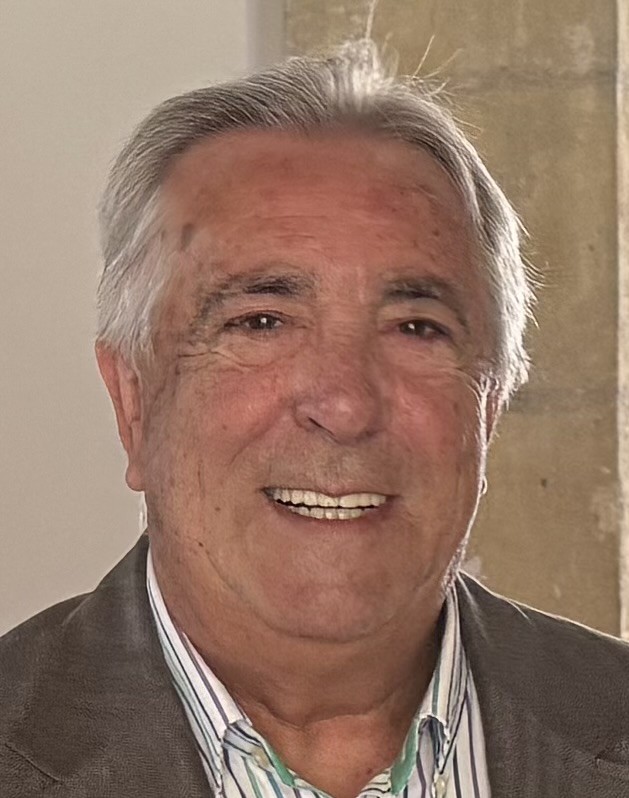
Biography
José Luis Verdegay holds a degree in Mathematics (1975) and a doctorate in Science (1981) from the University of Granada (UGR), with a thesis titled: Decision Problems in a Fuzzy Environment. He is currently professor emeritus in the Department of Computer Science and Artificial Intelligence at the UGR. He has held numerous positions at the UGR, on Spain’s Inter-Ministerial Commission for Science and Technology, and at the European Union’s TEMPUS Office. From 2008 to 2015 he served as the rector’s delegate and vice-rector of the UGR for ICT. Between 2015 and 2023 he was regional director of the Ibero-American University Postgraduate Association (AUIP) and, from April 2023 until his appointment as emeritus, director of the Department of Computer Science and Artificial Intelligence, a position he had previously held between 1990 and 1993. With more than 50 research projects directed, 29 books published, over 450 scientific articles, and 22 doctoral theses supervised in the field of fuzzy sets and systems, he ranks among the top 2% of the most influential researchers in the world according to Stanford University’s World Ranking of Scientists, a ranking in which he has appeared since its creation in 2019 up to the present year. Among other distinctions, Professor Verdegay is Doctor Honoris Causa from the Central University of Las Villas (Cuba), a corresponding member of the Cuban Academy of Sciences, and a Distinguished Researcher at the International Institute for Artificial Intelligence Research at Hebei University (China). He holds the gold medal of the Iranian Operations Research Society, is a fellow of the International Fuzzy Systems Association (IFSA), and is a permanent visiting professor at several universities outside Spain.
Talk
Sin fuzzy no hay paraíso
AI systems rely on sophisticated optimisation techniques to train models, tune parameters and ensure sound decision-making. As models grow in size and complexity and are increasingly deployed in real-world settings, the need to optimise under constraints —whether from data limitations, contextual considerations or interpretability requirements— has become more pressing. When, in addition, the available sources of information are verbal, or come directly from linguistic expressions, the optimisation models to be considered must incorporate tools from the field of fuzzy sets and systems, unless the aim is not to obtain the best solutions available in each case but simply to propose a solution. This talk connects decision-making with optimisation and surveys the most important fuzzy optimisation problems, from the most elementary and well known to those still to be studied and explored in automated decision systems.